
Diabetic Foot Ulcers: Risk, Assessment, and the Care Team
A clinical overview of diabetic foot ulcer prevention, risk assessment, examination, and the multidisciplinary care needed to preserve limb function.
Procedures & Wound Types · 4 min read
Patients with poorly controlled diabetes are at increased risk of developing foot ulcers long before any skin changes are visible. Sensory, motor, and autonomic neuropathy, coupled with impaired circulation and repetitive mechanical pressure, can all contribute. These risk factors often progress silently over the course of years before the first signs of an ulcer become apparent.
Preventing ulceration depends on identifying these risk factors early, performing regular foot examinations, and coordinating care across multiple disciplines.
This guide reviews diabetic foot ulcer risk, the essential components of the foot exam, and the role of the multidisciplinary care team.
Why Diabetic Foot Ulcers Develop
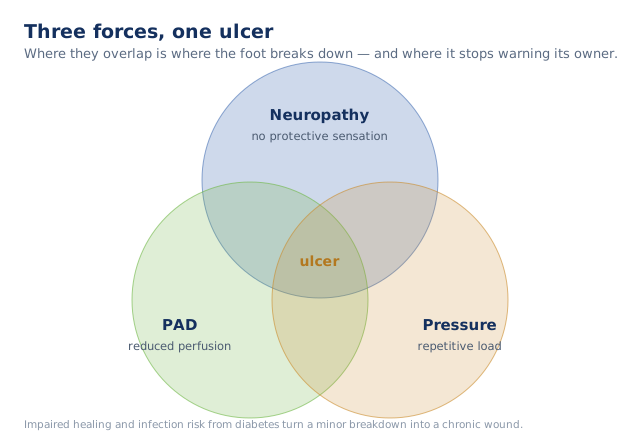
Most diabetic foot ulcers result from three overlapping factors:
- Peripheral sensory neuropathy, which reduces the patient's protective sensation
- Peripheral arterial disease (PAD), which limits blood flow and healing
- Repetitive mechanical pressure, often from deformity or poorly fitting footwear
When these factors occur together, even a minor injury can progress to a chronic ulcer, infection, osteomyelitis, or amputation.
Risk Stratification
Not every person with diabetes has the same risk of ulceration.
The International Working Group on the Diabetic Foot (IWGDF) recommends stratifying patients based on loss of protective sensation (LOPS), peripheral arterial disease, foot deformity, and prior ulceration or amputation.
| Risk Category | Typical Findings | Recommended Follow-up* |
|---|---|---|
| Very Low | No LOPS, no PAD | Least frequent |
| Low | LOPS or PAD | More frequent |
| Moderate | LOPS plus PAD or deformity | Regular surveillance |
| High | Prior ulcer or amputation with LOPS and/or PAD | Most frequent surveillance |
*Follow current IWGDF recommendations and facility protocols.
A patient with a history of ulceration and absent pedal pulses requires much closer monitoring than a patient with newly diagnosed diabetes and intact sensation.
Performing the Diabetic Foot Exam
A comprehensive foot examination should assess four key areas.
Skin and Foot Structure
Inspect pressure points and the spaces between the toes for:
- Calluses
- Fissures
- Color changes
- Skin breakdown
Identify deformities such as claw toes, prominent metatarsal heads, or Charcot changes that increase plantar pressure.
Protective Sensation
Loss of protective sensation is typically assessed with a 10-gram monofilament, often combined with a 128-Hz tuning fork to evaluate vibration perception.
Patients unable to detect monofilament pressure have an increased risk of ulceration.
Perfusion
Assess vascular status by examining:
- Dorsalis pedis pulse
- Posterior tibial pulse
- Skin temperature and texture
- Hair distribution
- Dependent rubor
Absent pulses or signs of ischemia should prompt vascular evaluation.
Footwear and Offloading
Appropriate footwear should be considered part of the treatment itself, rather than an afterthought to it.
Inspect the patient's shoes and inserts directly at each wound care evaluation. Poorly fitting shoes or inadequate offloading can lead to poor outcomes even when the wound care orders are in line with the standard of care.
When an Ulcer Is Present
Assessment extends beyond identifying the wound.
Document:
- Location
- Size and depth
- Infection
- Tissue perfusion
- Offloading strategy
Alongside proper documentation, effective offloading is one of the most important interventions in treating a diabetic foot ulcer.
The Care Team
Successful diabetic foot care requires coordination across multiple disciplines.
Depending on the patient's needs, the care team may include:
- Wound care specialists
- Podiatry
- Vascular specialists
- Primary care or endocrinology
- Nursing staff
An integrated wound care and podiatry model allows clinicians managing wound healing and foot biomechanics to work from a shared treatment plan, reducing delays in care and improving communication.
For skilled nursing facilities, that means specialists who assess the entire foot—not just the wound—and provide a practical plan that nursing staff can implement between visits.
Key Takeaways
- Most diabetic foot ulcers are preventable with early risk identification.
- Neuropathy, peripheral arterial disease, and repetitive pressure are the key risk factors for ulceration.
- Comprehensive foot examinations should include skin, sensation, perfusion, and footwear.
- Offloading is essential to both the prevention of ulceration and the achievement of healing.
- Multidisciplinary care improves coordination and helps reduce complications.
Advance your wound care practice.
ProHealth One Institute offers a nationally accredited wound care certification with continuing education for nurses and therapists.
Explore the certification course ↗Related reading
Chemical Cauterization with Silver Nitrate: Managing Hypergranulation Tissue
How silver nitrate chemical cauterization manages hypergranulation tissue: mechanism, technique, frequency, and the contraindications to know.
Pressure Injury Staging: Stage 1 Through 4, Unstageable, and Deep Tissue
A clinical refresher on the NPIAP pressure injury staging system, with practical guidance on the distinctions clinicians most commonly find challenging.
Peristomal Skin and Ostomy Care Basics
A practical guide to assessing the stoma, protecting peristomal skin, achieving a reliable appliance seal, and recognizing when specialty ostomy care is needed.