
Types of Wound Debridement Compared (Autolytic, Enzymatic, Mechanical, Sharp, Biological)
A comparison of the five primary wound debridement methods, including when each is appropriate and how they differ in speed, selectivity, and clinical use.
Wound Treatment & Management · 3 min read
Removing devitalized tissue is often an essential step in wound healing. The best debridement method depends on the wound, the patient's overall condition, treatment goals, and the clinicians available to perform the procedure.
This guide compares the five primary approaches to wound debridement and explains where each fits in clinical practice.
Debridement Methods at a Glance
| Method | Speed | Selectivity | Typically Performed By | Common Uses |
|---|---|---|---|---|
| Autolytic | Slow | High | Nursing staff | Low-infection wounds, comfort-focused care |
| Enzymatic | Moderate | High | Nursing staff (under provider order) | Adherent slough or necrotic tissue |
| Mechanical | Moderate–Fast | Low | Nursing staff | Selected wounds when other methods are not appropriate |
| Sharp | Fastest | High | Trained clinician or surgeon | Extensive necrosis, infected wounds, urgent debridement |
| Biological | Moderate | High | Specialist-directed | Selected chronic wounds when surgery is not appropriate |
Autolytic Debridement
Autolytic debridement uses the body's own enzymes and inflammatory cells to soften and remove devitalized tissue. Moisture-retentive dressings create an environment that supports this natural process.
Because it preserves healthy tissue, autolytic debridement is the most selective and generally the least painful approach.
Its primary limitation is speed. It is not appropriate for wounds with uncontrolled infection and requires careful monitoring to prevent periwound maceration.
Enzymatic Debridement
Enzymatic debridement uses topical proteolytic enzymes to selectively break down necrotic tissue while preserving viable tissue.
It is often used when sharp debridement is unavailable, inappropriate, or not well tolerated, and can be continued by facility staff under an established treatment plan.
For a more detailed discussion, see our guide to Enzymatic Debridement.
Mechanical Debridement
Mechanical debridement removes devitalized tissue through physical force.
Methods include:
- Monofilament debridement pads
- Pulsatile irrigation
- Hydrosurgery
- Wet-to-dry dressings (used less frequently in modern wound care because they are nonselective and may damage healthy tissue)
Mechanical techniques can be effective but generally remove viable tissue along with necrotic tissue and may increase patient discomfort.
Sharp Debridement
Sharp debridement uses instruments such as scalpels, curettes, or scissors to remove nonviable tissue.
Two forms are commonly recognized:
- Conservative sharp debridement, performed at the bedside by appropriately trained clinicians
- Surgical debridement, performed in the operating room for extensive or rapidly progressive wounds
Sharp debridement provides the fastest removal of necrotic tissue and is often indicated for infected or rapidly deteriorating wounds.
Biological Debridement
Biological debridement, also known as maggot debridement therapy, uses sterile medical-grade larvae to selectively digest necrotic tissue.
Although less commonly used, it can be highly effective for selected chronic wounds when surgical debridement is not appropriate or other methods have been unsuccessful.
Patient and family acceptance should always be considered before treatment.
Choosing the Right Method
No single debridement method is appropriate for every wound.
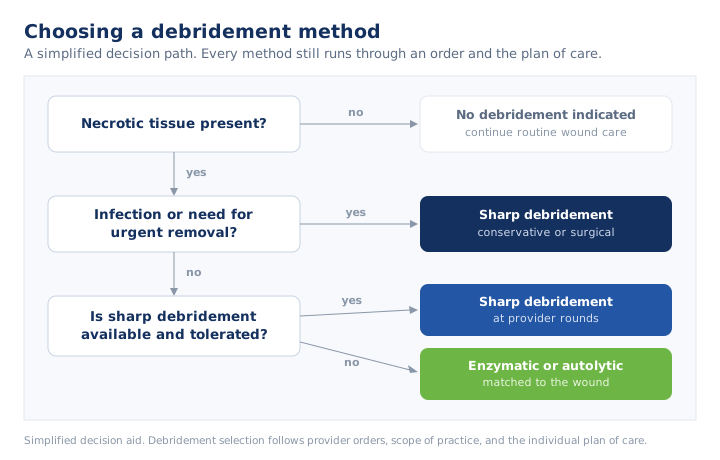
Many chronic wounds require more than one approach over the course of treatment. For example, a wound may undergo sharp debridement during a provider visit and then transition to enzymatic or autolytic debridement to maintain progress between visits.
Successful wound care depends on matching the debridement method to the patient's needs, the wound characteristics, and the overall treatment plan.
Clinical Education Disclaimer
This article is intended for the continuing education of licensed healthcare professionals. It does not replace provider orders, clinical judgment, or an individualized plan of care.
Advance your wound care practice.
ProHealth One Institute offers a nationally accredited wound care certification with continuing education for nurses and therapists.
Explore the certification course ↗Related reading
Enzymatic Debridement: How It Works and When to Use It
A practical overview of enzymatic debridement, when it's appropriate, and how it compares with other debridement methods.
Wound Odor Management: Causes, Assessment, and Clinical Options
What causes wound odor, how to assess it, and the clinical options for managing it — a practical primer for nursing and facility clinical staff.
Managing Wound Exudate and Drainage: Dressing Selection by Exudate Level
Assess wound exudate and match dressings to drainage level — light, moderate, heavy — in this clinical-education primer for nursing and therapy staff.